A crate should feel like your dog's own room, not a box they get sent to. Humane World for Animals describes crate training as working with a dog's natural instinct to seek out a comfortable, quiet and safe place when the house gets too loud. What you put inside the crate, and where you put the crate itself, decides whether it feels that way.
The steps below follow crate guidance from Humane World for Animals, the American Kennel Club and veterinary behaviorists writing for VCA Animal Hospitals.
The short answer
Pick a crate your dog can stand up and turn around in, line the floor with a washable, waterproof mat, and add a soft bed or blanket that suits your dog's size and chewing habits. Put the crate where the family spends time, keep the door open when you are home, and wash the bedding on a schedule so the crate stays clean and dry.
What you need for a comfortable dog crate
A short list for a cozy crate
Comfort starts before the crate door ever closes. Whether you searched how to make dog crate comfortable for a new puppy or what to put in dog crate setups for an older dog, the answer is a short list, and you may already own half of it.
Here is what to put in a dog crate on day one:
- A crate that fitsBig enough to stand up and turn around.
- A washable crate matWaterproof, so the floor tray stays dry.
- A bed or crate padSoft, washable and sized to the crate floor.
- A breathable coverOptional, for dogs who settle better covered.
- A safe toy or chewSomething good to do while inside.
Step 1: Choosing the right crate size
Room to stand up & turn around
Every good dog crate setup starts with size. Humane World for Animals says the crate should be large enough for your dog to stand up and turn around in, and the American Kennel Club adds lying down to that list. Veterinary behaviorists writing for VCA Animal Hospitals put it as room to stand, turn and stretch out.
Puppies are the tricky case. Humane World suggests choosing a crate for your dog's adult size if they are still growing, and notes that some crates adjust as a dog grows and some local shelters rent crates so you can trade up along the way. The AKC's version is a larger crate with a divider that sections off half of it until the puppy grows into the space.
Humane World lists three common types of crate:
- Plastic crates, often called flight kennels
- Fabric crates on a collapsible, rigid frame
- Collapsible metal pens (VCA notes that a collapsible metal crate with a tray floor works well)
Whichever type you choose, measure the inside floor, length and width, before you buy anything to go in it.
Step 2: Lining the crate with a dog crate mat
A soft, dry layer underfoot
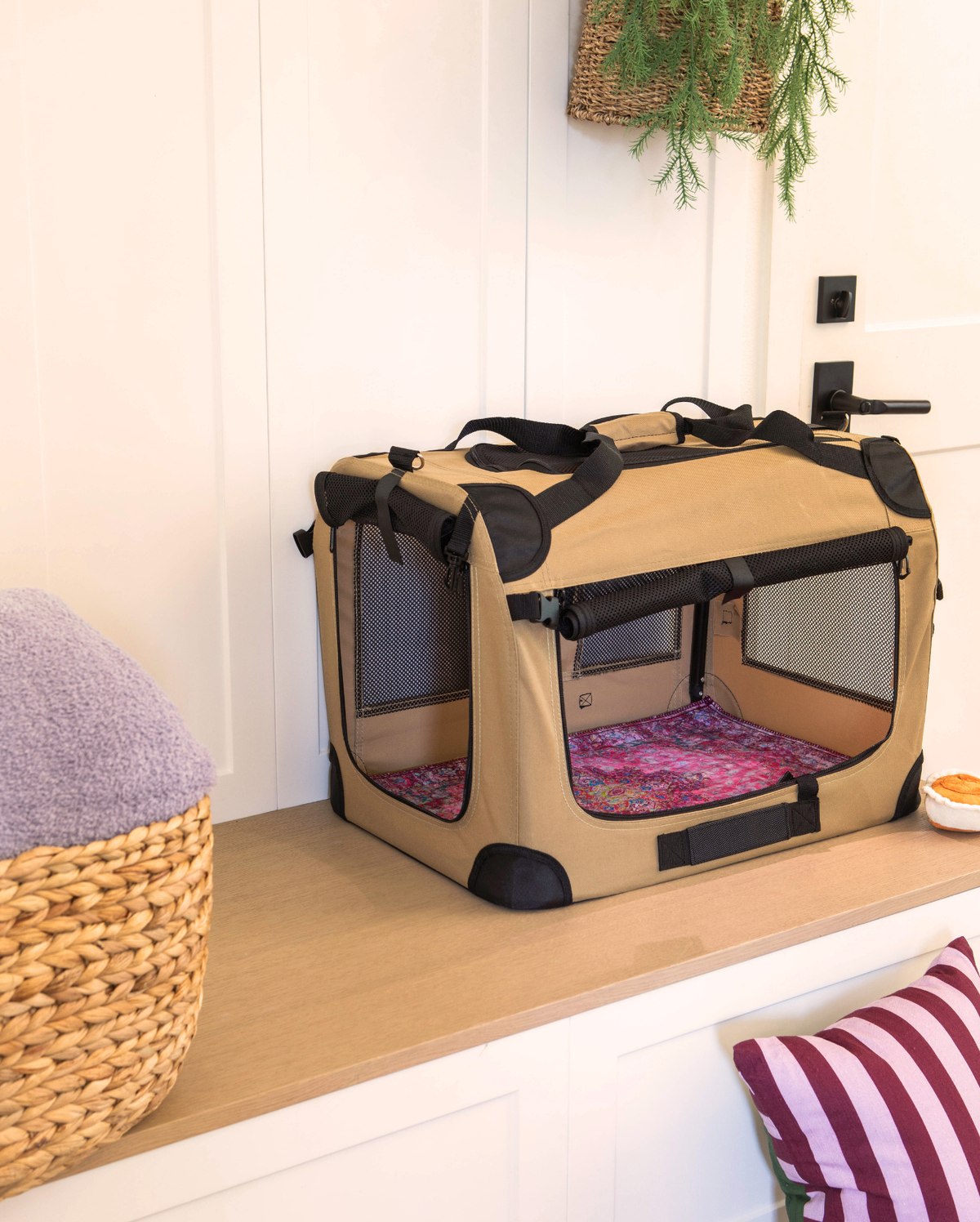
A dog crate mat is the base layer of a comfortable crate: it covers a hard plastic or metal tray, gives your dog something soft under their paws, and catches drips from a wet coat, a muddy paw or a water bowl before they reach the floor.
The best dog crate mat is the one that handles the mess after it happens. Look for three things:
- A waterproof layer, so moisture stays in the mat and off the tray
- A machine washable build, so cleanup is a wash cycle and not a scrub
- A non-slip backing, so the mat stays flat when your dog turns around
Lovewag mats are made in those three layers: an absorbent top layer, a waterproof, leak-proof barrier and a non-slip backing. Lovewag lists its 16 x 24 size mats for use "inside crates and carriers", and they come in 2-packs, so one can stay in the crate while the other is in the wash. The Caramel Creme dog crate mat is in stock in that size at the time of writing, at $24.99 for two. If your dog also rides in a carrier, the travel mats collection gathers the patterns in one place.
Check the fit against the floor you measured. A 16 x 24 mat lines a crate floor of about that size. In a bigger crate it covers the sleeping end, with the bed beside or on top of it. Lovewag lists its larger sizes for playpens, bedding areas and floor protection rather than crates, so measure before you size up.
Step 3: Adding a dog crate bed or crate pad
Something soft to sink into
Humane World's guidance is that the crate should always have a comfortable bed, and its FAQ answers yes to putting a bed or blanket in a dog crate to make it cozy and inviting. A dog crate bed, a dog crate pad or a folded blanket can all do the job, as long as the bedding is washable and right for your dog's size and chewing habits.
Choose by shape and fit. A flat crate pad leaves the most standing room in a snug crate, while a bed with raised sides needs a crate with room to spare. Either way, it should lie flat without bunching.
Layer the bed over the mat, not instead of it. The mat protects the floor and catches spills, and the bed is the cushion. When the bed goes in the wash, the mat is still there, so the crate is never bare.
Step 4: Placing the crate in a quiet spot
Close to the family, away from the bustle
Where the crate sits matters as much as what is in it. Humane World's crate training basics say to place the crate in an area where the family spends a lot of time, such as the family room, and in a calm part of the home where your dog can relax without constant stimulation or noise. In practice that means a quiet corner of a busy room.
At night, Humane World suggests keeping the crate in your bedroom or a nearby hallway at first, especially with a puppy, so your dog does not link the crate with being alone. Once your dog sleeps comfortably through the night, you can move it gradually to the spot you prefer.
- Keep the door open when you are home, so your dog can go in for quiet time on their own
- Ask children and guests not to poke fingers through the bars, tap on the sides or bother your dog inside
- Try low background sound: VCA notes a radio or television may help calm a dog left alone in a crate
Step 5: Keeping the crate clean & dry
Clean bedding on a dry floor
A crate collects whatever your dog brings in: water drips, a damp coat after a rainy walk, crumbs from a chew, the odd accident. A waterproof dog crate mat keeps that moisture in the mat and off the tray, and a washable dog crate mat lets you reset the whole floor in one wash cycle.
Lovewag's care routine is short. Shake out debris regularly, spot clean spills right away, and machine wash cold on a gentle cycle with any household detergent, then tumble dry low or air dry. Lovewag suggests a wash every one to two weeks for best results. The Lovewag mat FAQ adds that you should skip bleach to protect the designs, and that a splash of white vinegar or a laundry sanitizer can go in the wash for extra freshness.
- Every day: shake out the mat and check the bed for crumbs or damp spots
- When it happens: spot clean spills and dry your dog off before crate time
- Every one to two weeks: wash the mat cold and gentle, and the bed by its own label
- Before it goes back: let everything dry fully, and wipe the tray dry too
That last step matters for grip. Lovewag says its non-slip backing works best on clean, dry floors, so a damp tray lets the mat slide. When you shop for bedding, check whether the dog crate pad washable claim covers the whole pad or only its cover, and follow that maker's care label for the pad and Lovewag's for the mat.

Dog crate questions
What pet parents ask us
What should you put in a dog crate?
Start with a crate your dog can stand up and turn around in. Then add a washable mat on the floor, a soft bed or blanket that suits your dog's size and chewing habits, and a safe toy or chew. Humane World for Animals also suggests feeding meals near the crate so your dog links it with something pleasant.
Should you put a bed in a dog's crate?
Yes. Humane World for Animals says the crate should always have a comfortable bed, and that the bedding should be washable and appropriate for your dog's size and chewing habits. If your dog chews bedding, take it out and ask your vet or a trainer what is safe for that dog.
How do you keep a dog crate dry?
Line the floor with a waterproof, machine washable mat, shake it out often and spot clean spills right away. Dry your dog after a rainy walk before crate time, wash the mat every one to two weeks, and let the mat and tray dry fully before you set the crate back up. Lovewag's non-slip backing works best on clean, dry floors.
Should you cover a dog crate at night?
It depends on the dog. Veterinary behaviorists writing for VCA Animal Hospitals note that some dogs feel more secure with a blanket draped over the crate, and the AKC suggests covering the top with a blanket or a crate cover for a den feel. The AKC also calls for a well-ventilated crate, so leave room for air to move, and take the cover off if your dog chews it or seems unsettled with it on.
How long can a dog stay in a crate?
Humane World for Animals says adult dogs should not be crated for more than 4 to 5 hours during the day, and puppies under 6 months no more than three or four hours at a time. A crate is a den, not a place to spend most of the day, so plan exercise, play and time together around it.
More pet mat guides & tips
Keep reading