Every dog bed has a moment when the smell reaches the hallway. The cover looks fine from across the room, but up close it holds hair, dander and the mud from the last rainy walk. The American Kennel Club lists allergies, parasites and bacteria among the reasons to wash a dog's bed, and adds that clearing out coat oils, fur and residue helps a bed last longer.
The catch is that a dog bed is rarely one thing. There is a cover, often an insert, a blanket on top and, in many homes, a washable mat underneath. Each piece has its own rules, so this guide takes them in order.
The short answer
Read the care label, then vacuum or shake out as much hair as you can. Machine wash only what the label allows, usually the cover, blankets and mats, with a fragrance-free detergent, and keep foam inserts out of the washer. Dry on the lowest heat the label allows or air dry, and put nothing back until it is fully dry. Lovewag mats wash cold on a gentle cycle and tumble dry low or air dry.
What you need to wash a dog bed
Gather it before the cover comes off
Nothing here is special equipment. Most of it is already in your laundry room.
- A vacuumWith a crevice tool for the seams.
- A lint roller or tapeRubber gloves lift hair too.
- Fragrance-free detergentA pet-friendly one, as the AKC suggests.
- A washing machineOr a bathtub for oversized beds.
- A dryer or a flat surfaceLow heat, or room to air dry.
- White vinegarOptional, for a fresher rinse.
Step 1: Reading the dog bed care label
Start with the tag, not the washer
Before anything gets wet, find the care tag. It is usually sewn into a seam of the dog bed cover, and the insert may carry a second tag of its own. How you wash a bed depends on its material, its size, the maker's instructions and how dirty it is, as the AKC puts it, and the tag is where those instructions live.
Most tags use laundry care symbols instead of words. These are the ones that matter for a dog bed:
- A washtub means machine washable. In the North American system, dots in the tub set the top water temperature, and more dots mean hotter water.
- A hand in the tub means hand wash only. A tub with a cross through it means do not wash it at home.
- A triangle covers bleach. A triangle with a cross through it means no bleach of any kind.
- A circle inside a square means tumble dry. One dot asks for reduced heat, two dots allow normal heat, and a cross means no dryer.
- A plain circle means professional cleaning, and a bar under any symbol asks for gentler treatment.
Step 2: Shaking out hair & debris
Get the hair out before the water goes in
Hair comes off first, while everything is still dry. The AKC warns that dog hair mixed with water clumps up and can clog your machine.
Take the bed outside if you can and give the cover a firm shake. Then vacuum the top, the seams and the sides, where hair packs in tight. For what is left, the AKC suggests a lint roller, masking tape, or rubber or latex gloves: run a gloved hand across the fabric and the hair rolls into clumps you can pick off.
Blankets get the same treatment. If you are working out how to get dog hair out of blanket fabric, shake it, vacuum it flat on the floor, then go over it with tape or a rubber glove before it goes near the washer.
Step 3: Washing a dog bed in the machine
Cover in, foam out, gentle settings
Here is how to wash a dog bed in a home machine once the label says yes. Unzip the cover and take out any insert or bolster. Blankets and soft beds usually go in the machine, the AKC says, as long as they fit and the label allows it.
So, can you put a dog bed in the washer? A machine washable dog bed can go in whole if it fits, and a bed with a removable cover sends just the cover. Foam is the main exception. One foam bed maker's care card reads: remove the foam base and bolster, spot clean the foam base with a damp cloth as needed, machine wash the cover and dry on low heat.
When you know how to wash dog bed covers, the cycle itself is short work:
- Detergent: a fragrance-free, pet-friendly detergent, per the AKC.
- Temperature: the warmest setting the bed's own label allows. The AKC notes that high-temperature programs can kill germs and parasites, but the label sets the limit.
- Hair control: a dog bed laundry bag keeps loose hair in one place.
- Afterward: check the washer's filter and wipe the rubber door seal, where hair collects.
Too big for the washer? Here is how to clean dog bed pieces by hand, from the same AKC guide. Set the bed in a bathtub, or an outdoor children's pool, and fill it with warm water, a pet-safe laundry detergent and a cup of vinegar. Squeeze and knead the bed, drain, rinse until no soap is left, then disinfect the tub. Skip the kitchen sink, where germs can spread to the place you prepare food.
Step 4: How to wash dog blankets & pet mats
The pieces around the bed need care too
Blankets and mats are the easy part. The AKC points out that blankets suit heavy shedders and oily coats because they can be washed weekly while the bulkier bed is washed less often. That is the simplest answer to how to wash dog blankets, and to how to wash pet blankets for cats too: shake, vacuum, then follow the tag.
For the washable mat beside or under the bed, the maker sets the steps. Here is how to wash pet bedding and mats from Lovewag, straight from our product pages and the How to wash pet bedding FAQ:
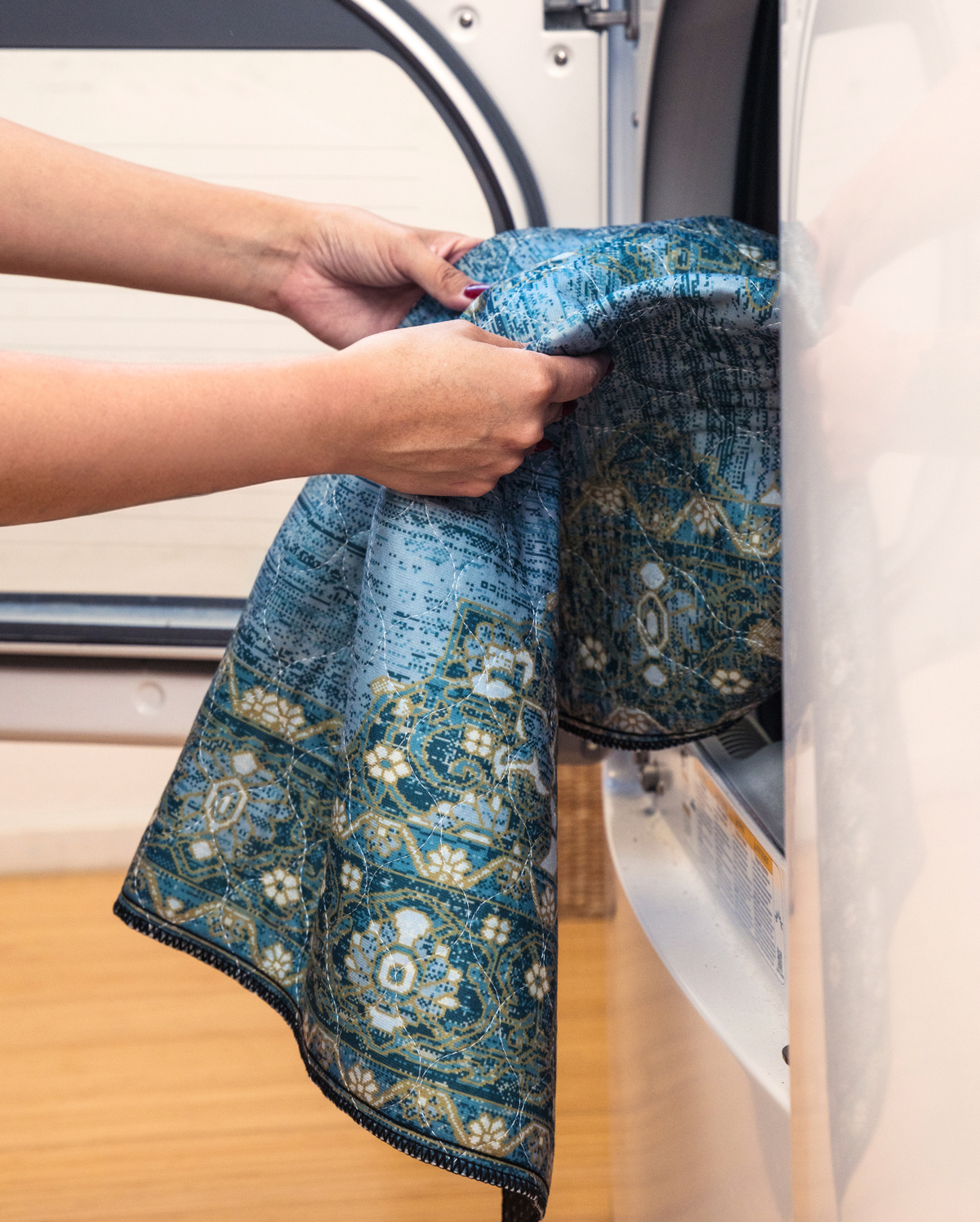
- Machine wash cold on a gentle cycle with any everyday household liquid detergent.
- Avoid bleach, to protect the designs.
- For extra freshness, add a splash of white vinegar or a laundry sanitizer to the wash.
- Tumble dry low or lay flat to dry.
- Wash every one to two weeks for best results.
Every Lovewag mat has three layers: an absorbent top layer to capture everyday pet messes, a waterproof barrier to protect floors underneath and a non-slip backing to keep it in place. The whole mat goes in the washer, so there is no insert to pull out and no cover to wrestle back on.
The patterned mats come as 2-packs in the three smaller sizes, so one mat stays down while the other is in the wash. Lovewag lists its 36 x 48 size mats for mudrooms, bedding areas and sofa or floor protection, a natural fit beside a dog bed. The Marmalade Sunshine mat is in stock in that size at the time of writing, at $31.99 for a 2-pack.
As for how to get dog smell out of blanket fibers and mats, wash before the smell settles in, add the vinegar or sanitizer splash and let everything dry completely.

Step 5: Drying a dog bed without shrinking it
Low heat, patience & a full dry
Drying is where a good wash can go wrong. Check the tumble dry symbol first: one dot means reduced heat, and a crossed-out square means no dryer at all. When in doubt, pick the lower setting, since a milder treatment than the label specifies is always acceptable.
The AKC says air drying is usually best for dog beds, because some bed fillings can clump in the dryer. Lay covers and blankets flat or hang them, and wait until thick, fiber-filled beds are completely dry before your dog climbs back in. A damp bed encourages mold and mildew, so put nothing back together until every layer is dry.
Lovewag mats keep it simple: tumble dry low or air dry, then lay them back down. The non-slip backing works best on clean, dry floors, so wait until the mat and the floor are both dry. The mats hold 4.9 stars from more than 1,600 Lovewag reviews, and the care behind them stays this short.
Last, plan the next wash. On how often to wash dog bed covers and blankets, the AKC cites the CDC in recommending weekly washing. Lovewag suggests every one to two weeks for its mats.
Dog bed washing questions
What pet parents ask us
Short answers to the questions that come up on laundry day, with the same care rules as the steps above.
Can you put a dog bed in the washer?
Yes, if the care label shows a washtub and the bed fits your machine. For many beds that means the removable cover, not the whole bed. Keep foam inserts out of the washer and spot clean them with a damp cloth instead. Beds too big for the machine can be washed in a bathtub with warm water, pet-safe detergent and a cup of vinegar, according to the AKC.
How often should you wash a dog bed?
The AKC cites the CDC in recommending weekly washing of dog bedding, and notes EPA guidance to deep clean dog beds every two to three weeks to help control fleas. How much your dog sleeps in the bed, its coat, its time outdoors and allergies at home all change the schedule. Lovewag suggests washing its mats every one to two weeks.
What detergent is safe for dog beds?
The AKC recommends a fragrance-free, pet-friendly detergent for dog beds and blankets. Check the care label for bleach: a triangle with a cross through it means none. For Lovewag mats, any everyday household liquid detergent works, and Lovewag recommends avoiding bleach to protect the designs.
How do you get dog smell out of a blanket?
Shake and vacuum out the hair first, then wash the blanket with a fragrance-free detergent at the temperature its label allows. Lovewag's FAQ suggests a splash of white vinegar or a laundry sanitizer for extra freshness in the wash. Dry it completely, since dampness invites mildew. If the bed itself still smells after a full wash, the AKC suggests it may be time for a new one.
When should you replace a dog bed?
If a bed still smells or looks bad after a full wash, the AKC suggests buying a new one. It also notes that the EPA recommends throwing away bedding that is heavily infested with fleas.
More pet mat guides & tips
Keep reading