Every litter box has a scatter zone. Your cat digs, kicks a little, then hops out with granules caught between its toes, and a few steps later the hallway feels gritty underfoot. Cat litter is loose by design, so the goal is not a spotless floor. It is a smaller mess, in one place, that takes seconds to clean up.
This guide works from the box outward. The litter box advice comes from the ASPCA, Humane World for Animals and veterinarian-reviewed guides, and the mat care comes straight from Lovewag's own care instructions.
The short answer
Put a washable mat where your cat steps out of the box, so loose granules drop there instead of on your floor. Then check the box itself: one to two inches of litter, a box big enough to turn around in, a litter with larger granules if your cat accepts one, and a quiet spot with room for the mat. Shake the mat out often and wash it every one to two weeks.
What you need to stop litter tracking
A short kit for the box area
Learning how to stop litter tracking is mostly about setup, not gadgets. In a studio with one cat or a house with three, how to stop cat litter tracking comes down to a few things you may already own.
- A washable litter matBig enough to reach past the box opening.
- A roomy litter boxLarge enough for your cat to turn around.
- A litter scoopFor scooping waste at least once a day.
- A small vacuumFor the stray grains that get past the mat.
- A washing machineFor a cold, gentle cycle every week or two.
Step 1: Finding where the litter tracking starts
Watch the trail before you fix it
Before you buy anything, spend a day noticing where the litter lands, because cat litter tracking has two main sources and each has its own fix. Granules sprayed over the side of the box come from digging. A line of single grains leading away from the box comes from paws: PetMD describes tracking as litter particles that get stuck to a cat's paws and are scattered around the house.
Digging is normal, since cats bury their waste by instinct. A veterinarian-reviewed PetMD article names two setups that make it worse: litter that is too shallow (it gives less than 1.5 inches as the point where cats struggle to cover their waste) and a box that is too small, which can make a cat dig more than usual. The ASPCA says most cats prefer one to two inches of litter.
- Litter sprayed over the sides points to digging: check litter depth and box size first.
- Grains in a line away from the box point to paws: put a mat at the exit.
- If you find cat litter everywhere, you are likely dealing with both, so work through every step below.
Step 2: Placing a litter box mat at the exit
Catch the grains at the doorway
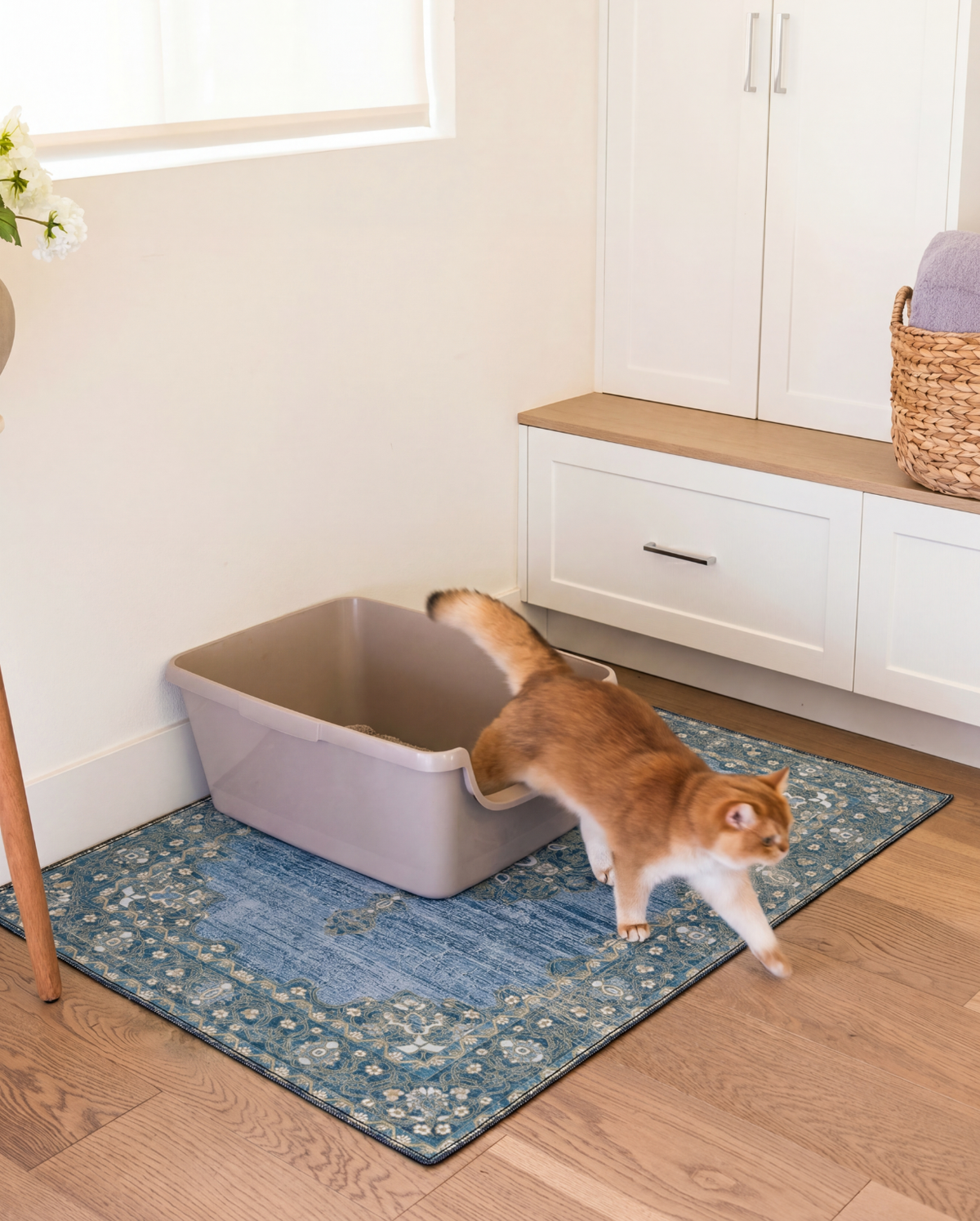
A litter box mat goes where your cat's paws land first after leaving the box, because that is where loose granules fall off. PetMD puts it simply: a cat litter box mat helps reduce tracking by catching loose particles before they spread through your home.
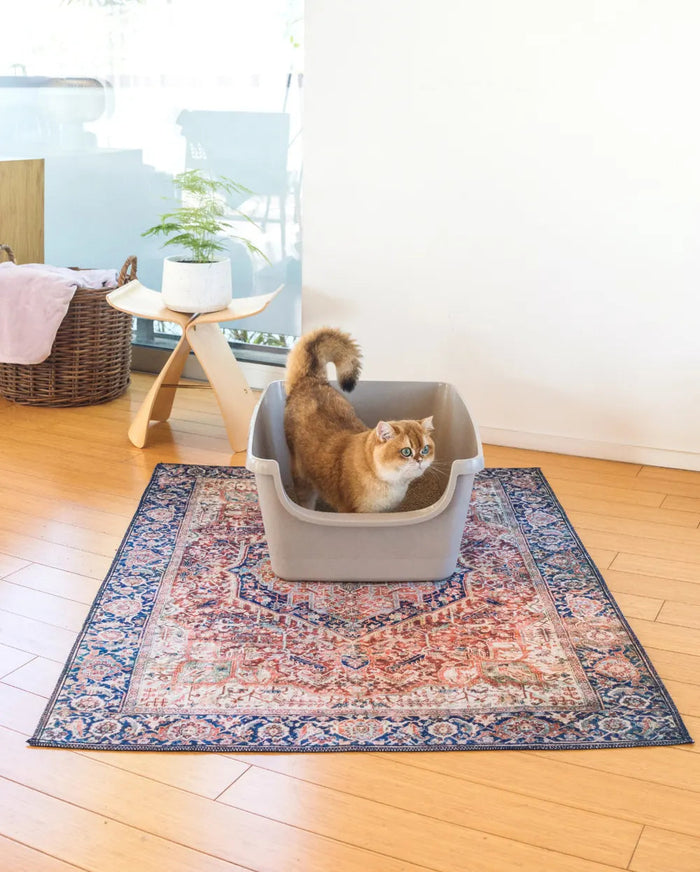
Lovewag lists its 28 x 41 size mats for this job: "under litter boxes, playpens, designated potty areas." Set the box toward the back of the mat so most of it lies in front of the opening, where it catches the spray over the sides and the grains on your cat's first steps. The Blue Hazel litter box mat was in stock in 28 x 41 at $29.99 for a 2-pack at the time of writing, and Bohemian Jewel was in stock in that size at $28.99. You can also shop all mats to match the room the box lives in.
Search for a litter tracking mat or a litter trapping mat and you will see two styles. Honeycomb and other double-layer mats have holes in the top layer that catch litter so you can tip it back into the box, and if trapping is your only goal, those holes are built for it. A Lovewag mat has an absorbent top layer, a waterproof barrier and a non-slip backing, looks like a small rug and goes in the washing machine, which suits a box in a room you walk through every day.
- Run the long side of the mat out from the box opening, not along the wall.
- Lay it on a clean, dry floor, which is where Lovewag says its non-slip backing works best.
- Pick a mat that feels soft underfoot: PetMD's vet notes cats should be comfortable stepping on it.

Step 3: Choosing a litter that tracks less
Bigger grains, slower changes
For tracking, granule size matters most. Wikipedia's cat litter entry says clay litter is made into large grains or clumps, which makes it less likely to be tracked than the sand used before it. PetMD's litter guide agrees: for minimal tracking, look for larger, heavier granules that are less likely to stick to paws, or a litter made specifically to reduce tracking.
There is a catch, and it matters for how to keep litter in the box at all. The ASPCA says cats generally prefer clumping, unscented litter with a medium to fine texture, and Humane World for Animals warns that changing litter types too often can lead to litter box avoidance.
A coarse litter your cat refuses is a far bigger problem than a fine one it uses every day.
- Offer the new litter in a second box beside the old one, as the ASPCA suggests, and let your cat choose.
- Skip strong scents: the ASPCA recommends unscented litter, and Humane World for Animals warns scented litters can overwhelm cats.
- Once your cat settles on a litter it likes, stick with it.
Step 4: Moving the litter box to a better spot
A quiet corner with room for a mat
Deciding where to put litter box setups is a comfort question first and a tracking question second. The ASPCA litter box problems guide notes that cats may avoid a box in a location they dislike, which is a much bigger problem than a few stray grains.
The ASPCA says cats like a quiet spot that is not cornered, where they can see people or other animals coming and have more than one way out.
- Away from high-traffic areas and loud machines like the washer and dryer.
- Away from your cat's food and water, and away from a dog's bowls.
- One box per cat plus one extra, according to the ASPCA.
- At least one box on each floor of a multistory home.
For litter box placement with tracking in mind, add one check of your own: leave enough clear floor in front of the opening for the mat to lie flat. A box squeezed into a narrow gap leaves no room for one, so the first steps land on bare floor. Humane World for Animals adds that a box in a closet or bathroom has to be easy for the cat to get in and out of.
Thinking about a new box? Wikipedia's cat litter article notes covered boxes may help reduce tracking, but the ASPCA says most cats do not like lids, and older cats may struggle with top-entry or high-sided boxes. PetMD suggests a large box with a low entry and tall sides as a middle ground.
Whatever you change, change one thing at a time, so you can tell what helped.
Step 5: Cleaning the litter mat
Shake it out often, wash it cold
Knowing how to clean litter mat surfaces keeps the mat doing its job, since a mat covered in loose grains has less room to catch new ones. For a Lovewag mat, shake out debris regularly or vacuum between washes, and spot clean spills right away. On wash day, shake it over a trash can first, then follow the care steps in the Lovewag mat FAQ and on every product page:
- Machine wash cold on a gentle cycle with any household detergent.
- Skip bleach: Lovewag recommends avoiding it to protect the designs.
- Add a splash of white vinegar or a laundry sanitizer for extra freshness, if you like.
- Tumble dry low or air dry.
- Wash every one to two weeks for best results.
If your cat has an accident on the mat, the waterproof, leak-proof barrier in the middle is there to protect the floor underneath, and the mat washes the same way.

Litter tracking questions
Short answers for cat parents
Why does my cat track litter everywhere?
Litter is loose and granular, and cats dig in it by instinct. PetMD explains that tracking happens when particles stick to a cat's paws and get scattered around the house. A box that is too small or litter that is too shallow can make digging worse. If the habit changed suddenly, check with your vet.
Which cat litter tracks the least?
Litter with larger, heavier granules tends to track less. Wikipedia notes that clay litter is made into large grains or clumps, which makes it less likely to be tracked than sand, and PetMD points to larger, heavier granules. Your cat still has to accept it: the ASPCA says most cats prefer clumping, unscented litter with a medium to fine texture, so switch slowly.
Where is the best place to put a litter box?
The ASPCA recommends a quiet, accessible spot that is not cornered, away from high-traffic areas, loud machines like the washer and dryer, and food and water bowls. Plan on one box per cat plus one extra, and one on each floor of a multistory home. For less tracking, leave room in front of the opening for a mat.
Can you machine wash a litter mat?
It depends on the mat. Lovewag mats are machine washable: cold water, a gentle cycle and any household detergent, no bleach, then tumble dry low or air dry. Some mats are rinsed by hand instead: Gorilla Grip says to rinse its honeycomb mat with soap and water and dry it completely. Check your mat's care label first.
How big should a litter box mat be?
Big enough to reach past the box opening, so your cat's first few steps land on the mat. Lovewag recommends its 28 x 41 inch size for use under litter boxes, and its 36 x 48 inch size for mudrooms, bedding areas and larger potty zones.
More pet mat guides & tips
Keep reading