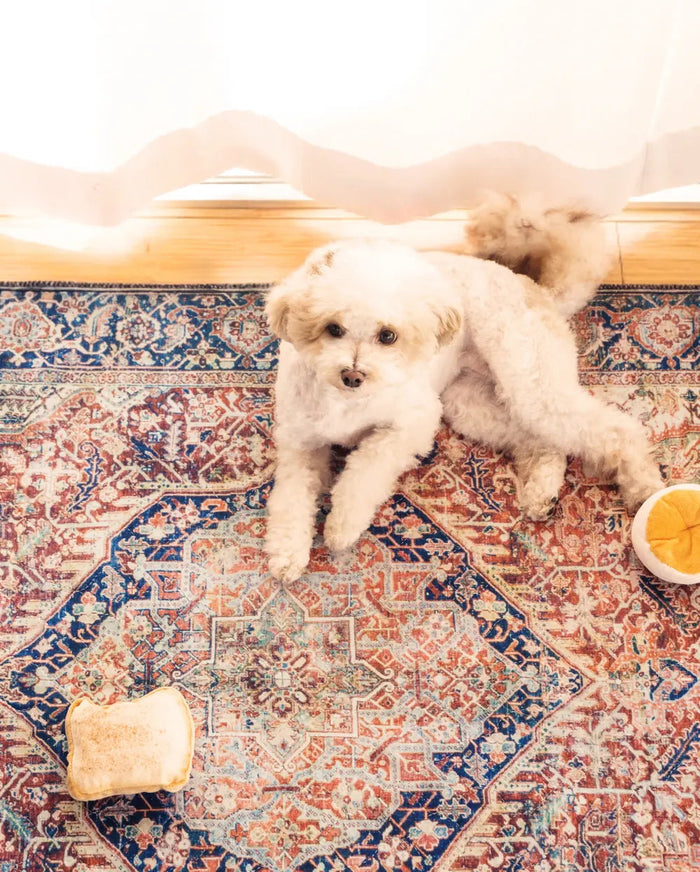
Most dogs eat in the same spot every day, and most of them are not tidy about it. Kibble skids off the rim, water drips from whiskers and jowls, and a bowl that slides an inch leaves a wet arc across the floor. A feeding station gives all of that one place to land.
Here is the setup in order: where the bowls go, what goes under them, how high they sit, where the food lives and how to keep the water side dry.
The short answer
Pick a calm spot out of the walkway on a floor you can wipe, set a washable, waterproof mat a few inches wider than the bowls underneath them, and keep the bowls at floor level unless your vet suggests otherwise. Store dry food in its original bag, top folded down, in a cool, dry place nearby, wash the bowls after each use and wash the mat every one to two weeks.
What you need for a dog feeding station
Before you set it up
A dog feeding station does not need special furniture, and most pet parents already own half of this list.
- Two bowlsOne for food, one for fresh water, sized to your dog.
- A washable matWaterproof, non-slip, a few inches wider than the bowls.
- A food containerBig enough to hold the original bag, folded shut.
- A dedicated scoopUsed only for pet food, never the bowl itself.
- A cleaning routineBowls after each use, the mat every week or two.
Step 1: Picking a spot for the dog food station
Find a quiet corner with an easy floor
Start with location, because the best dog food station is one you never have to move. Choose a spot your dog can reach at every meal, out of the main walkway, on a floor you can wipe clean and close enough to a sink that refilling the water bowl takes a few steps.
Skip the spot in front of the dishwasher or the back door, where people step over the bowls, kick them and carry the drips across the room.
Calm matters as much as convenience. For breeds at high risk of bloat, the Merck Veterinary Manual lists decreasing stress at mealtime among its prevention measures for owners. A quiet dog feeding area away from busy doorways is an easy place to start for any dog.
Most dog feeding station ideas come down to a few layouts:
- A kitchen corner, close to the sink and on a floor that wipes clean
- A mudroom or laundry room, out of the way and steps from the washer
- The open end of a kitchen island, if your dog is relaxed eating there
- Separate spots for each pet, so a cat can eat where the dog cannot reach
Step 2: Putting a dog bowl mat under the bowls
Catch the drips before the floor does
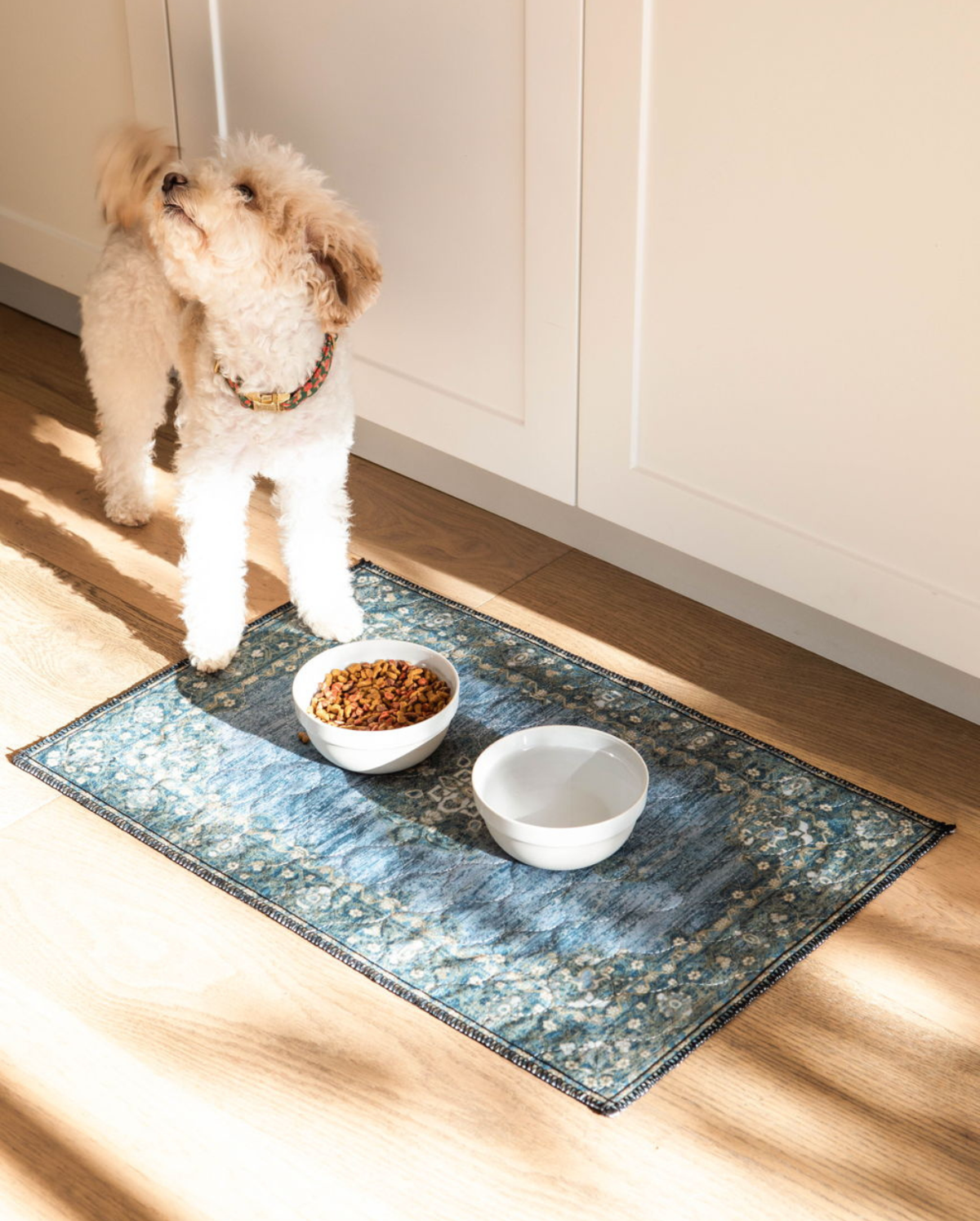
Set a dog bowl mat under both bowls so kibble, drips and spills land on something washable instead of the floor. Pick one that is waterproof, has a non-slip backing and runs a few inches past the bowls on every side.
A good dog food mat does two jobs: the top catches what falls, and the layer underneath keeps it from reaching the floor. Lovewag mats are built in three layers, an absorbent top layer designed to capture everyday pet messes, a waterproof barrier to protect floors underneath and a non-slip backing to keep the mat in place. They go in the washing machine, and they are patterned to look like a small rug, so the station blends into the kitchen without looking like a temporary fix.
Size is where most setups go wrong. Lovewag lists its smallest size, 16 x 24 inches, for use beneath food and water bowls and inside crates and carriers. Browse the 16 x 24 size mats or the Dog food mats collection: at the time of writing both show the same six patterns, and a 16 x 24 order is a 2-pack for $24.99. The Sage Forest mat, a refined medallion pattern in earthy sage and charcoal tones, is one of them.
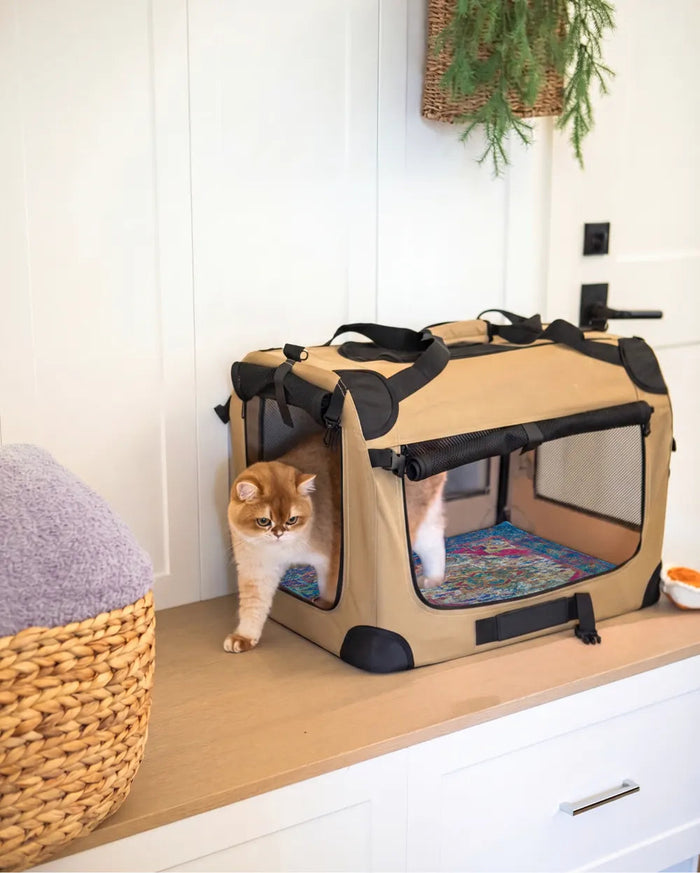
It works as a cat food mat too. Cats push kibble over the rim as well, and Lovewag's own photos show a cat drinking from a water fountain set on one of these mats.
What to look for in the best dog bowl mat:
- A waterproof barrier, not only an absorbent top
- A non-slip backing, so the mat stays put when a bowl gets nudged
- Machine washable, so cleaning means the washer and not the sink
- A size that runs a few inches past the bowls on every side
- A look you are happy to see in your kitchen every single day

Step 3: Raising the bowls or keeping them low
Ask your vet before you raise them
Elevated dog bowls and a dog bowl stand can look tidy, but bowl height is a health question, not a style one. Floor-level bowls on a mat are the safe default, and the time to raise them is when your vet suggests it.
Here is why. The American College of Veterinary Surgeons says gastric dilatation-volvulus, the emergency often called bloat, is not completely understood. It lists elevated feeding among the factors that have been suggested to increase its incidence, along with large or giant breed size and stress. It also links the condition to a deep chest and names Great Danes, Weimaraners and St. Bernards among the breeds commonly seen with it.
For owners of high-risk breeds, the Merck Veterinary Manual advises avoiding elevated feed bowls, feeding several small meals rather than one large meal and restricting exercise before and after meals. Merck also lists rapid eating and once-daily feeding among the factors associated with the condition.
That guidance is aimed at breeds at high risk, and it is not a verdict on every dog. Some pet parents consider a dog bowl stand for an older dog that is stiff or has trouble lowering its head. That is exactly the case to take to your vet, who knows your dog's breed, age and history.
If your vet does suggest a stand, the mat still goes underneath it. Water drips from a raised bowl just the same.
Step 4: Storing dog food near the station
Keep the food close, cool & sealed
Store dry food close to the station but out of your dog's reach, in a cool, dry place below 80 F, in its original bag with the top tightly folded down. Those come straight from the FDA pet food handling tips, and they shape most good dog food storage ideas.
According to the FDA, excess heat or moisture can cause the nutrients in dry food to break down. That rules out the cabinet beside the oven or the dishwasher and the sunny shelf by the window. It also says to keep pet food in a secure location, so your pet cannot eat an entire supply at once.
Dog food storage ideas that follow those tips:
- A lidded bin big enough to hold the whole bag, so the bag stays folded shut inside it
- A pantry shelf or a closed cabinet near the station, away from heat
- A clean scoop that lives with the food and is used only for pet food
- Opened canned or pouched food covered in a fridge set to 40 F or below, or thrown out
Two more FDA habits are worth building into the routine. Wash your hands for at least 20 seconds with soap and hot water before and after handling pet food, and wash the bowls, scoops and measuring cups with soap and hot water after each use. Never use your dog's food bowl as the scoop.
Step 5: Keeping the dog water bowl area dry
A dry floor after every drink
Most of the mess at a feeding station comes from the dog water bowl, so give it the most protection: set it toward the middle of the waterproof mat, keep it filled with fresh water without topping it to the brim and wipe up spills as they happen.
A dog drinks, lifts its head and the drip trail lands just past the rim. A bowl nudged by a paw or a puppy who treats the water bowl as a toy can send far more. The goal is to make sure all of it lands on the mat.
That is where the barrier earns its place. As the Lovewag mat FAQ puts it, the mats feature a waterproof, leak-proof barrier designed to protect your floors from spills, accidents and messes. While the absorbent top takes the drips, the barrier keeps them off the wood or tile underneath.
A few habits from Lovewag's care instructions keep the water side dry:
- Spot clean spills right away instead of letting them sit
- Shake out debris regularly so kibble crumbs do not build up
- Lay the mat back on a clean, dry floor, where the non-slip backing works best

Dog feeding station questions
Quick answers before you set up
What do you put under a dog bowl?
A washable, waterproof mat with a non-slip backing. It catches kibble and water drips, helps keep the bowls in one place and goes in the washing machine when it gets dirty. Lovewag lists its 16 x 24 size for use beneath food and water bowls, and it comes as a 2-pack, so one mat can be in the wash while the other stays down.
Are elevated dog bowls better?
Not as a rule. Veterinary sources treat bowl height as a health decision. The American College of Veterinary Surgeons lists elevated feeding among the factors suggested to increase the incidence of bloat, and the Merck Veterinary Manual advises owners of high-risk breeds to avoid elevated feed bowls. If you are thinking about a raised bowl for an older or stiff dog, ask your vet first.
How do you stop a dog from splashing water?
Some dogs are simply messy drinkers, so aim to control where the water goes rather than stop every drop. Use a sturdy bowl that does not slide easily, fill it to a sensible level instead of the brim, set it toward the middle of a waterproof mat with room on every side and spot clean spills as they happen.
How often should you wash a dog bowl mat?
Lovewag's care instructions say to wash its mats every one to two weeks for best results, to shake out debris regularly and to spot clean spills right away. Machine wash cold on a gentle cycle with household detergent, avoid bleach, then tumble dry low or air dry.
Bowls run on a faster schedule: the FDA says to wash them with soap and hot water after each use.
Can you add vinegar when washing a dog bowl mat?
For a Lovewag mat, yes. The Lovewag FAQ says you can add a splash of white vinegar or a laundry sanitizer to the wash cycle for an extra boost of freshness, along with any everyday household liquid detergent. It recommends avoiding bleach to protect the designs.
More pet mat guides & tips
Keep reading